
How to Check Criminal History in Glasscock County
Begin with the record's purpose, not a person's name alone. A filed felony or misdemeanor belongs with the combined County and District Clerk. A fresh arrest, incident report, warrant question, or receiving-jail location begins with the Glasscock County Sheriff's Office. The Texas DPS Crime Records Public Site supplies the state's public conviction and deferred-adjudication product. It does not replace the local case file. TDCJ covers sentenced state prisoners, and the Texas registry covers public sex offender information.
Have a full legal name, spelling variants, date of birth when lawfully known, an approximate event or filing year, and any cause or incident number. Those facts help a small office distinguish similar names. They do not prove identity. DPS states that fingerprints are the positive method of matching a person to a criminal history.
- Identify whether the question concerns a court case, arrest, warrant, statewide history, custody, or registry entry.
- Call the correct Glasscock County custodian and provide a narrow date range plus any known number.
- Ask for an index or docket before ordering a full file, and request a current fee quote.
- Compare the local result with the relevant DPS, TDCJ, or registry record when the question crosses county lines.
- Order a certified disposition or fingerprint personal review when accuracy or correction is the goal.
Glasscock County Criminal Record Counters
The most common local mistake is going to the courthouse address when the needed case file sits at another counter. The official Glasscock County homepage lists the sheriff at the courthouse on 117 E. Currie Street. The combined clerk's public counter is at 209 South Myrl Street. Felony scheduling also involves the 118th District Court's primary office in Big Spring. Calling first matters because county hours are 8:30 a.m. to 4:00 p.m., and the regional judge may sit on a visiting docket.
That split reflects Glasscock County's scale and geography. The county covers 900.22 land square miles but had only 1.2 residents per square mile in the 2020 Census profile. Garden City functions as the records hub without being an incorporated city. The 118th District, prosecution, probation, parole, and some custody services reach into Big Spring or another county. A broad search by place name can miss that structure, so confirm both the record creator and the office that now keeps the file.
| Custodian | Best starting question | Contact |
|---|---|---|
| Combined County and District Clerk | Filed charge, docket, judgment, sentence, or certified disposition | 209 S. Myrl St.; 432-354-2371 |
| Glasscock County Sheriff | Incident, arrest, booking, warrant, or receiving jail | 117 E. Currie St.; 432-354-2361 |
| Glasscock Justice Court | Fine-only citation, failure to appear, or related warrant | P.O. Box 91; 432-354-2382 |
The official combined clerk page shows the separate contact point.
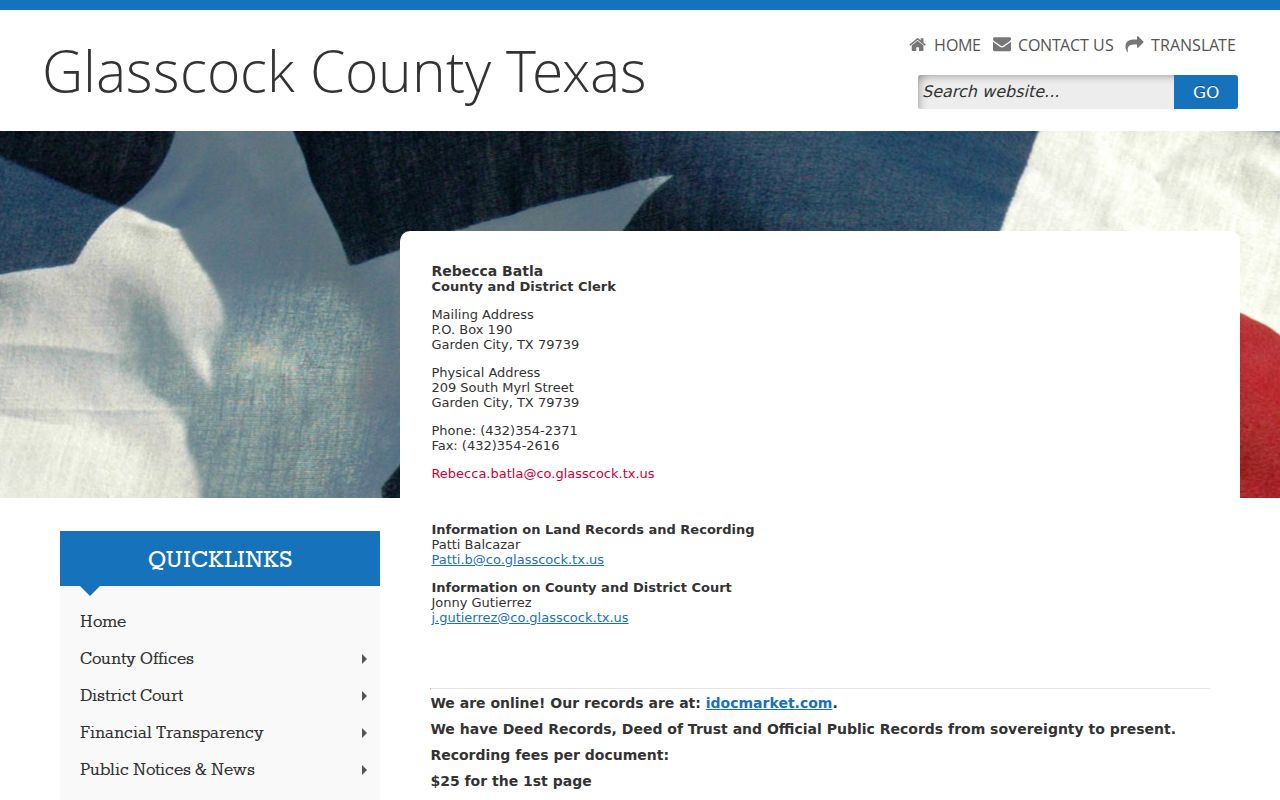
That distinction keeps a records visit focused on the office that can quote copy and certification terms.
Official Texas Background Checks
The Texas Department of Public Safety maintains the Computerized Criminal History system. Its public name search releases conviction and deferred-adjudication criminal history, including the connected arrest information authorized by Government Code Section 411.135. A credit costs $1 for each complete record opened. Card purchases add 2.25 percent per credit and $0.25 per transaction. The official mail CR-42 request costs $10. Neither route is a fingerprint-confirmed identity match.
For a person's own accurate Texas record, DPS directs the subject to a fingerprint personal review. Fingerprint Applicant Services of Texas, operated by IDEMIA through IdentoGO, captures the prints. DPS lists a $15 record check plus a $10 FAST fingerprint fee. No verified FAST site lies within Glasscock County, so use the current location search rather than relying on old hours for a nearby vendor.
Glasscock County Record Match Choices
The public name tool and fingerprint review solve different problems. A name search can locate public conviction or deferred data, but common names, aliases, birth-date errors, and Soundex matching can produce too many or too few candidates. The DPS matching instructions explain previews and credits.

The preview can help narrow a result, yet fingerprints remain the state standard for a positive personal match.
| Point | DPS public name search | Fingerprint personal review |
|---|---|---|
| Scope | Public conviction and deferred-adjudication CHRI | The subject's own identity-linked Texas history |
| Identity method | Name and descriptive fields | Fingerprints through FAST |
| Use when | Reviewing a possible public record | Checking or correcting your own record |
The DPS public entry page is the official start for the name product.
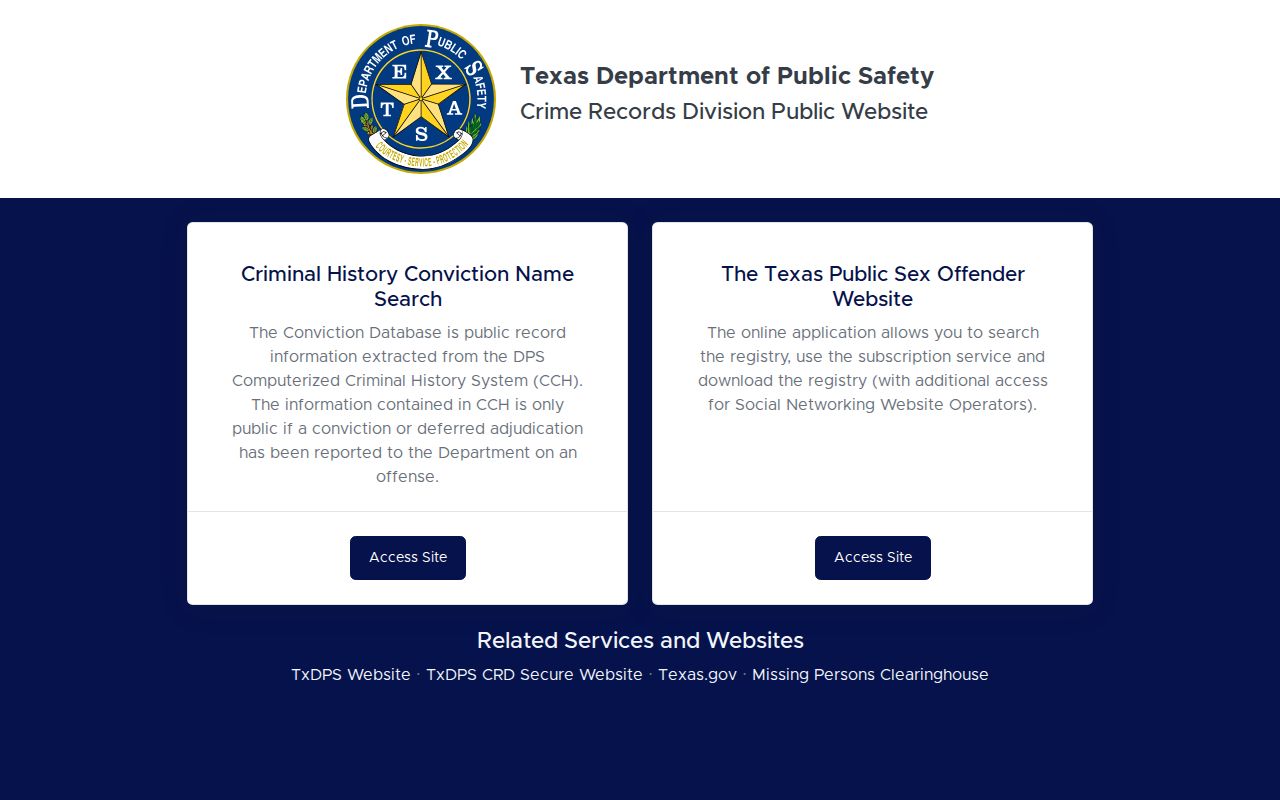
For fingerprints, the FAST appointment and location interface provides current enrollment choices.

The location tool is essential because the research found no confirmed Glasscock County enrollment site.
Types of Criminal Records
A single event can produce distinct records with different custodians. An incident report narrates what an officer investigated. A booking file records intake and custody. The charging instrument states what the prosecutor brought to court. A docket tracks hearings and orders, while the judgment states the final court outcome. DPS later compiles reported arrest, prosecution, and disposition data into CCH. Each source answers a separate question.
- Arrest and booking records: held by the arresting agency and the jail that accepted the person.
- Criminal court files: held by the combined clerk for County Court and 118th District matters.
- Warrant records: checked separately with the sheriff, Justice Court, clerk, and issuing court.
- Custody and supervision: divided among the receiving jail, TDCJ, CSCD, and Parole Division.
- Registry listings: maintained by Texas DPS with local verification through the sheriff.
The Glasscock County criminal court case file is the best place to confirm the filed charge and disposition, while the arrest page explains the earlier custody record.
Glasscock County Custody Record Gap
Texas Commission on Jail Standards reports rate Glasscock County's jail capacity at zero. The county does not publish a current jail roster, booking log, inmate line, visitation vendor, or named receiving-jail contract. A person arrested here may therefore be housed outside Glasscock County. The search must first identify that receiving facility. Historic references to the old jail do not show that it operates today.
Call the sheriff with the full name and approximate arrest time. Ask which jail accepted the person, then use only that facility's official roster or phone. Texas IVSS-Counties can add booking, release, transfer, and court notifications where participation and data are available. TDCJ is only for sentenced state prisoners, not county pretrial custody.
The notification route also changed recently. Texas moved county victim notifications from VINE to Texas IVSS-Counties on September 1, 2025. Existing registrations carried over, while users were directed to update passwords at first login. The old VINELink reference on the county sheriff page should not be treated as current instructions. Search access does not require registration, but confidential calls, texts, or email notices do. Confirm local participation and never depend on a notification system as a real-time safety tool.
Custody flow: Glasscock arrest → sheriff confirms receiving jail → receiving jail roster → Texas IVSS notification → clerk case check.
What a Glasscock County Criminal Record Shows
Record contents depend on the source and on release law. A public CCH record may show identity descriptors, an arrest cycle, prosecution, a reported outcome, and sentence data. The local court file can add the charging instrument, motion history, bond orders, settings, plea, judgment, costs, and sentence. A booking sheet may show intake and transfer details that never belong in a court docket. Missing fields can reflect redaction, system scope, or reporting delay.
| Name and identifiers | Primary name, aliases, birth details, physical descriptors, and authorized state or FBI identifiers. |
|---|---|
| Arrest cycle | Arrest date, agency, charge text, statute, and tracking control data. |
| Court case | Cause number, filed charge, events, disposition date, judgment, and sentence. |
| Custody | Booking, transfer, release, prison unit, or supervision status when the relevant system reports it. |
| Restricted data | Juvenile, victim, financial, biometric, and sealed information may be withheld or redacted. |
Read each entry in context. An arrest charge is an officer's initial accusation, a filed charge is the prosecutor's court allegation, and a disposition is the result of that count. A dismissal does not itself erase the arrest cycle. Likewise, a no-result on the DPS public site may reflect dissemination limits rather than an empty sheriff or court file.
Glasscock County Arrest Record Flow
The arresting deputy, trooper, constable, or federal officer creates the first agency record. Booking adds fingerprints, a photo, intake facts, and a tracking control number. DPS uses biometric submissions to connect qualifying arrests to a state identity. Prosecutors can decline or change the initial charge. The combined clerk then reports the final disposition for covered cases. That chain explains why an arrest label may not match the filed charge or judgment.
A DPS result can show an arrest with no disposition when the clerk submission was missing or returned for error. Do not assume the cause remains pending. Request a certified Glasscock County disposition, complete a fingerprint personal review, and follow the DPS correction route with the supporting document. The local judgment controls what the court adjudicated.
Public Access Laws
Texas law separates agency records, court files, state CHRI, juvenile data, and remedies. A focused Texas Public Information Act request can seek existing sheriff records, but active-investigation and confidential material may be withheld. Judicial case records follow court access rules through the clerk. DPS public dissemination is narrower than the full law-enforcement history. The office holding the original record remains the best place to ask.
Key Texas authorities:
Government Code Chapter 552 governs requests for existing agency records and permitted exceptions.
Government Code Section 411.135 authorizes public conviction and deferred-adjudication CHRI.
Code of Criminal Procedure Chapter 66 sets criminal justice reporting duties.
Family Code Chapter 58 protects and seals qualifying juvenile records.
Glasscock County Sheriff Record Requests
The sheriff publishes no separate records division, request email, form, portal, fee schedule, or turnaround. Call 432-354-2361 before sending a request, and ask the office to confirm the delivery address. The courthouse address is public, but it is not expressly labeled as the sheriff's Public Information Act mailing address. A request should describe existing records instead of asking the office to explain an event.
| Request detail | What to provide |
|---|---|
| Record scope | Incident report, arrest report, booking sheet, 911/CAD, body-camera file, or warrant information |
| Event facts | Date, time, location, agency, and incident number when known |
| Delivery | Preferred electronic or paper format and a response contact |
| Cost control | Ask for an itemized estimate and willingness to narrow the request |
No local price was located for reports, booking records, certified sheriff records, or body-camera copies. Texas rules require an itemized estimate when expected cost exceeds $40. Prompt production is the standard; ten business days is not a universal delivery promise.
Sealed, Expunged & Restricted
Texas expunction under Code of Criminal Procedure Chapter 55A can direct destruction or return of qualifying arrest-related records. It is not automatic after every dismissal. Eligibility depends on the outcome, waiting framework, charging history, limitations period, and same-episode rules. A Glasscock County filing generally begins with the combined District Clerk under the statute's venue terms. The county publishes no petition packet or fee, so ask for the current filing and service total.
An order of nondisclosure is different. It restricts public release of eligible criminal history but preserves access for criminal justice agencies and other recipients named by law. Juvenile sealing follows Family Code Chapter 58. Redaction of a protected field is also different from either remedy. Preserve certified copies of any signed relief order before records are removed from ordinary access.
Glasscock County Criminal Record Relief
The official current expunction chapter is Chapter 55A, effective after recodification.
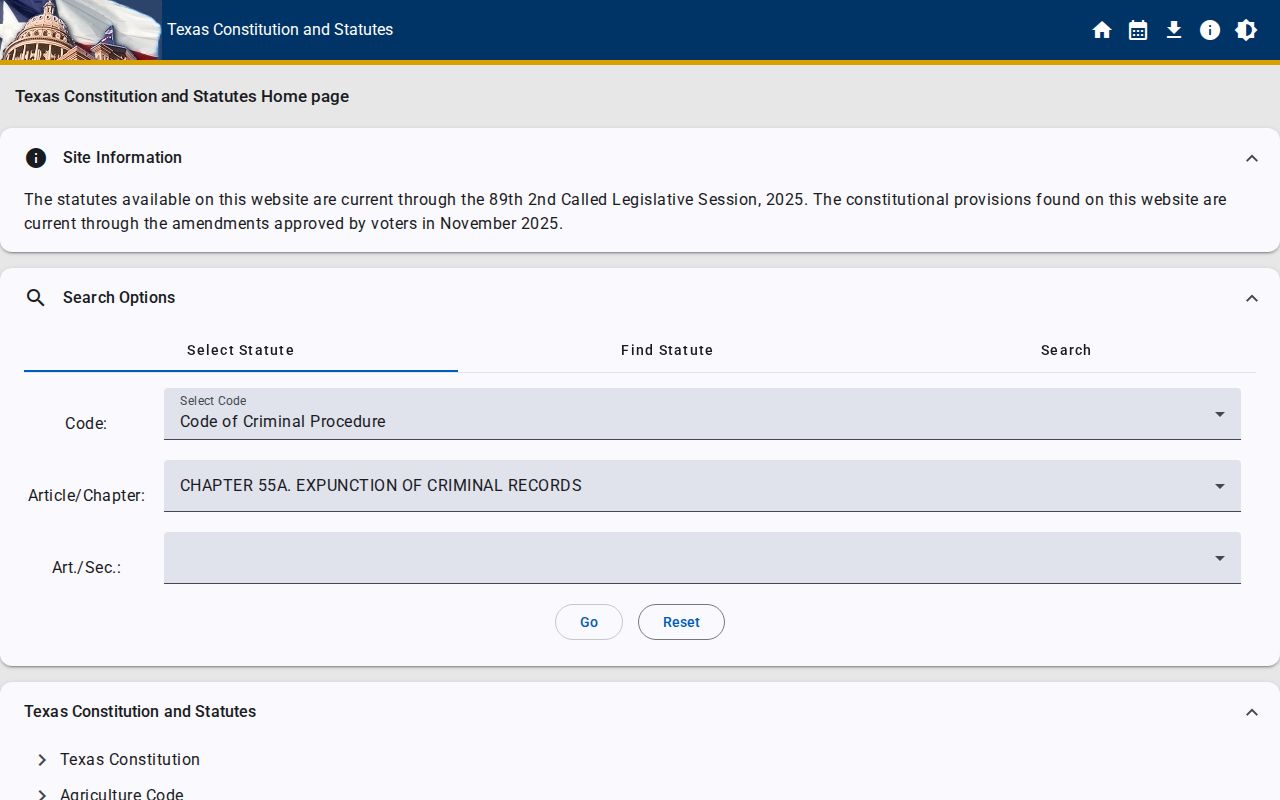
The statute supplies the route-specific rules that a local filing must meet.
The companion Government Code Chapter 411 provisions govern nondisclosure and criminal-history dissemination.
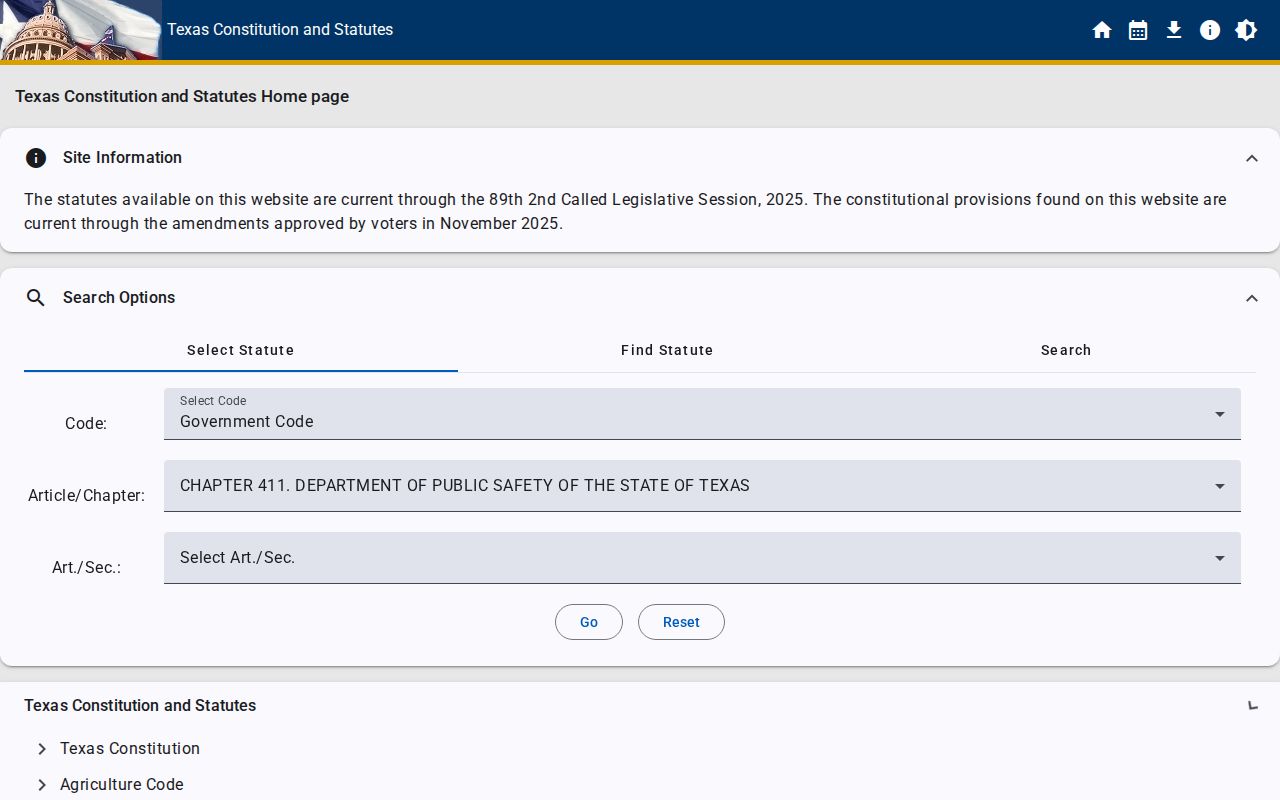
After either form of relief, compare the clerk index with a fingerprint personal review and use the official correction process for any lingering mismatch.
| Point | Expunction | Nondisclosure |
|---|---|---|
| Effect | Destroys or returns qualifying arrest records | Limits public disclosure while the record remains |
| Typical venue | Statutory district-court venue, often county of arrest | The court that handled the eligible case |
| Access after order | Narrowly governed by Chapter 55A | Named agencies retain statutory access |
Criminal Records by City in Glasscock County
Glasscock County has no incorporated cities, according to the official local planning source and Texas court directories. Garden City is the unincorporated county seat, not a municipality. It has no city police department, city hall, or municipal court. Criminal record routes therefore remain countywide: the sheriff handles local agency records, the Justice Court handles fine-only matters, and the combined clerk routes County Court and 118th District cases. No city guide is created because doing so would falsely label an unincorporated community as a city.
A Garden City arrest can still cross a county line for custody because Glasscock County has no rated jail beds. Ask the sheriff for the receiving facility before searching a roster. For a citation, call the countywide Justice Court. For a felony or Class A or B misdemeanor file, use the combined clerk and confirm which local or regional court holds the cause.
Glasscock County Regional Record Offices
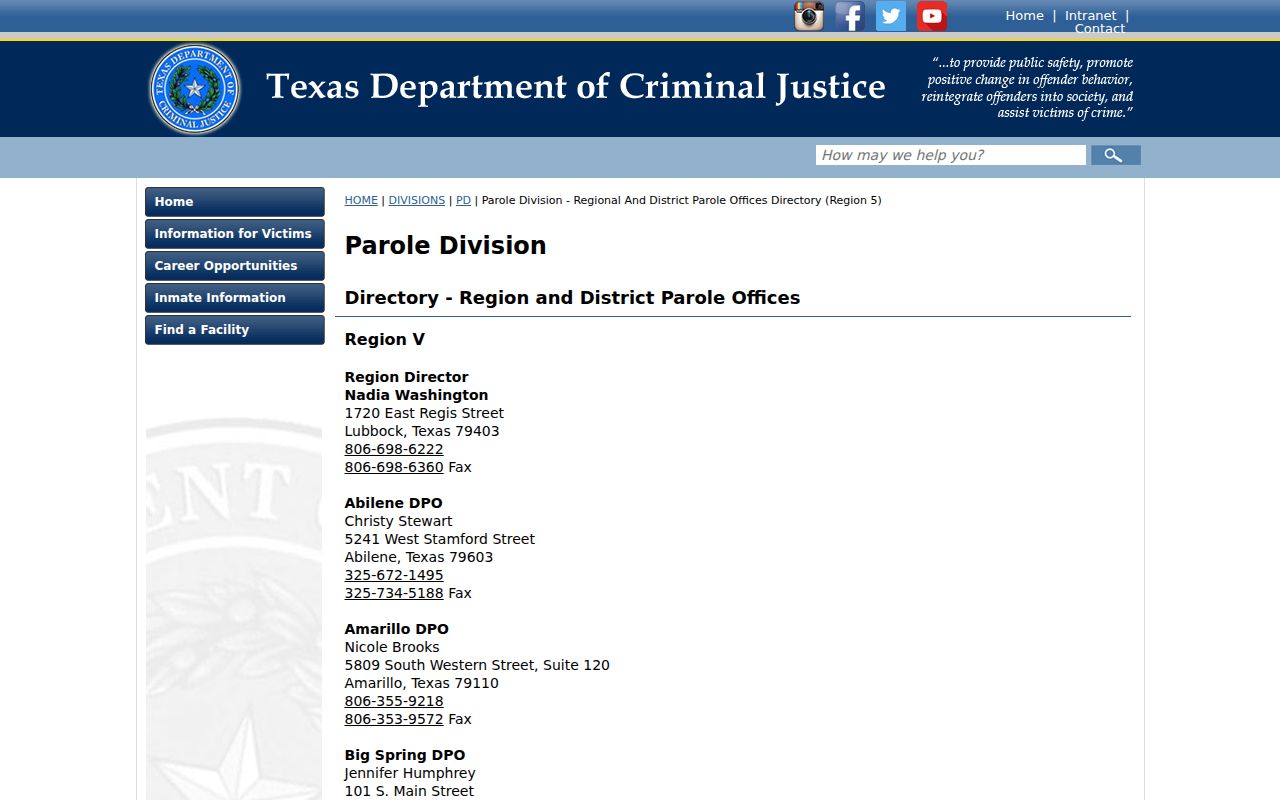
Several parts of the Glasscock County justice system operate from Big Spring. The 118th District Court serves Glasscock, Howard, and Martin counties. Howard County CSCD is the main regional community-supervision contact for that grouping. The TDCJ Big Spring District Parole Office serves Glasscock County parole matters. A court judgment is still the first public source for a supervision term, while officer notes and probation files are not a public online directory.
118th District Court
P.O. Box 528, Big Spring, TX 79721
432-264-2225
Howard County CSCD
315 Main St., Suite B, Big Spring, TX 79721
432-264-2245
Big Spring Parole Office
101 S. Main, Big Spring, TX 79720
432-263-8501
The TDCJ Region V directory confirms the parole office serving Glasscock County.
This regional structure makes the exact office and record type more important than the nearest place name.
The Glasscock Justice Court page identifies the countywide fine-only court.
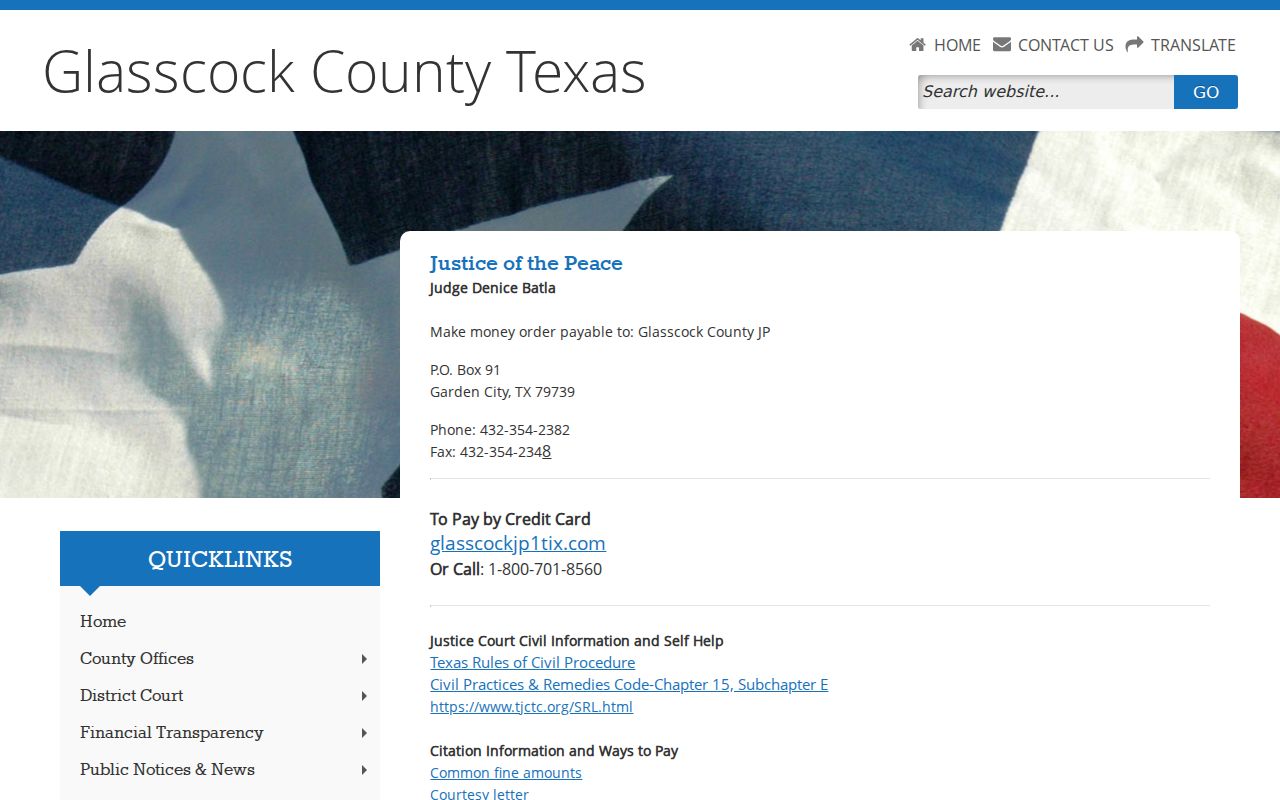
It is the right local contact for citations and related failure-to-appear records, not for felony case files.